Quick Answer
When you or a loved one comes home after a hospital stay, the transition can feel uncertain. Home health care after hospital discharge fills that gap by providing hands-on support with daily tasks, personal care, and safety monitoring. Day Star Home Health Care helps Minneapolis-area families navigate this period with calm, consistent care at home.
Leaving the hospital is a milestone, but it is rarely the end of the recovery journey. The days and weeks that follow are often the most demanding, when physical strength is rebuilding, routines are disrupted, and the risk of complications is still real. We understand how overwhelming this period can feel for both the patient and the family.
Home health care after hospital discharge gives you a structured, professional layer of support right where recovery happens best: at home. This post explains exactly what that support looks like, which services matter most, and how to set things up so the transition goes smoothly for everyone involved.
Why Home Health Care After Hospital Discharge Matters
Hospitals focus on stabilizing a condition. Once you are stable enough to leave, the ongoing work of healing shifts to you and your care team at home. Without the right support in place, small setbacks can turn into serious problems, including readmissions that everyone wants to avoid.
A trained home care provider bridges the gap between the clinical environment and everyday life. They help manage daily routines, watch for warning signs, and reduce the physical and emotional stress that often derails recovery. The goal is a safer, steadier path back to your normal life.
- Reduces the risk of falls and medication errors during recovery
- Provides consistent, familiar support rather than repeated emergency interventions
- Relieves family members who cannot provide round-the-clock assistance
- Helps you or your loved one regain confidence in daily tasks gradually
- Keeps the care plan coordinated with instructions from the discharging hospital team
What Services Are Typically Provided at Home
The services that matter most after discharge depend on the individual’s condition and how much assistance they need day to day. At Day Star Home Health Care, support is shaped around each person rather than a fixed package.
Common services include personal care assistance with bathing, dressing, grooming, and mobility. Homemaking support keeps the living environment clean and safe. Adult companion care addresses the loneliness that often accompanies recovery. Night supervision provides coverage when the risks of being alone are highest.
- Personal care assistance: help with bathing, dressing, and hygiene
- Homemaking: light housekeeping, laundry, and meal preparation
- Adult companion care: social engagement and emotional support
- Night supervision: monitoring and immediate assistance after dark
- Personal support: help with errands, appointments, and daily structure
How to Prepare for Home Health Care After Hospital Discharge
Preparation starts before the discharge date, not after. Ask the hospital’s discharge planner or social worker for a written summary of the patient’s needs, restrictions, and follow-up appointments. Share that document with your home care provider so everyone is working from the same information.
At home, do a quick safety walk-through. Clear tripping hazards from hallways, ensure the bathroom has grab bars or a shower chair if needed, and confirm that medications are organized and accessible. These steps take less than an hour but make a significant difference in those first days back.
- Request a written discharge summary from the hospital before leaving
- Share that summary with Day Star Home Health Care at 651-447-1886
- Remove loose rugs and clutter from main pathways
- Set up a medication schedule with clear labels
- Confirm the first home care visit is scheduled before the patient arrives home
Understanding Personal Care Assistance and Independent Living Support
Personal care assistance is often the cornerstone of post-discharge home care. A personal care assistant (PCA) helps with the physical tasks that are hardest to manage alone after surgery, illness, or a health crisis. Over time, as strength returns, the level of assistance can be adjusted so the person regains independence at their own pace.
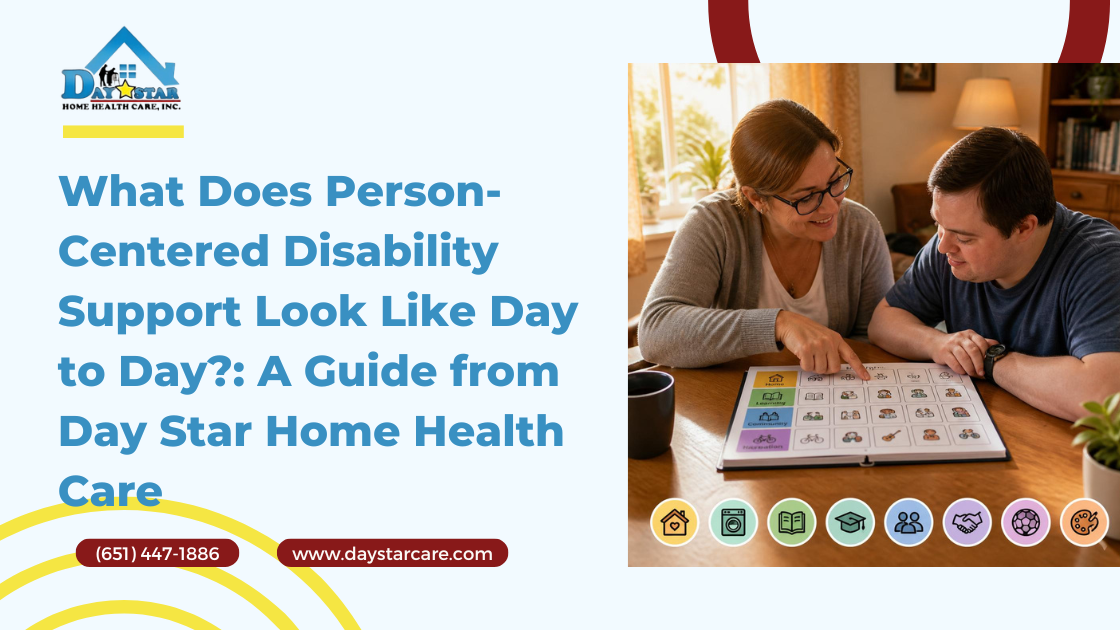
For individuals who want to build lasting skills for managing daily life, independent living skills programs offer structured coaching alongside hands-on support. This approach is especially valuable for younger adults with disabilities who are returning home after a medical event and want to maintain as much autonomy as possible.
Supporting Family Caregivers During the Post-Discharge Period
Family members often carry a heavy load after a loved one comes home from the hospital. The responsibility can be constant, and the emotional weight adds up quickly. You do not have to manage this alone, and trying to do so can lead to caregiver burnout that harms everyone involved.
Respite care gives family caregivers planned time away while a trained professional steps in. Our respite care services are designed for exactly this situation: giving families a reliable break so they can return refreshed and present. This is general information about care planning, not medical or financial advice; confirm specific coverage details with your insurance plan or healthcare provider.
Frequently Asked Questions
How soon after hospital discharge can home care begin?
In most cases, home care can begin the same day or within 24 hours of discharge. Contacting a home care provider before the discharge date gives the best chance of having support ready when the patient arrives home.
Does insurance cover home health care after hospital discharge?
Many insurance plans, including Medicaid waiver programs in Minnesota, cover certain home care services after a hospital stay. This is general information, not financial advice; confirm your specific benefits with your plan or a benefits counselor.
What if my loved one needs help during the night?
Night supervision services provide monitoring and immediate assistance after dark, which is when falls and disorientation are most common. Day Star Home Health Care offers this service for clients who need overnight coverage.
Can a home care provider help if my family member has dementia or a disability?
Yes. Day Star Home Health Care supports adults with a wide range of conditions, including dementia, physical disabilities, and cognitive challenges. Care plans are tailored to each individual’s needs and abilities.
How do I get started with Day Star Home Health Care?
Call 651-447-1886 to speak with our team directly. We will discuss your situation, explain your options, and help coordinate a care plan before or right after discharge.